Physical Address
304 North Cardinal St.
Dorchester Center, MA 02124
Physical Address
304 North Cardinal St.
Dorchester Center, MA 02124
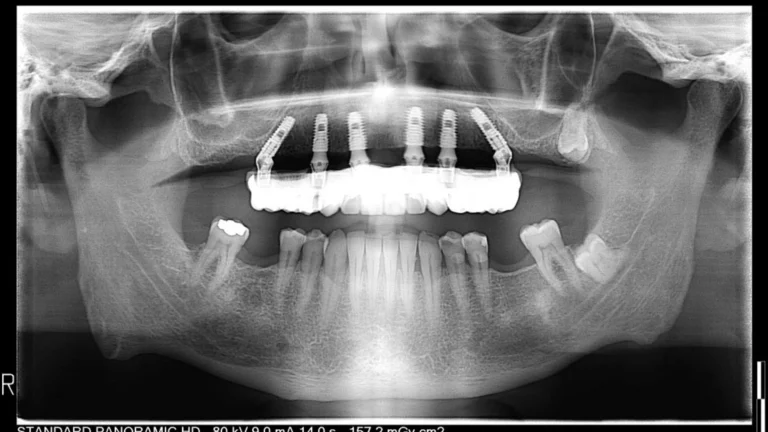
Most people had never heard of full-arch dental implant surgery until a recent story from the Jacksonville and Ponte Vedra area made headlines. In early October, a 44-year-old man died during a full-mouth implant procedure. The case is still being investigated, and no final findings have been released by the Medical Examiner or local authorities. Understandably, this has led many people to question whether this type of dental surgery is inherently dangerous.
In reality, full-arch implant surgery is performed safely every single day across the country. The procedure itself has a strong safety record and a long track history of predictable, successful outcomes. The surgical steps rarely cause life-threatening complications. When serious events happen in dentistry, they almost always involve sedation or airway management, not the implants or the surgical process.
Modern full-arch implant surgery has become highly refined. With today’s imaging tools, digital guides, and improved implant designs, the process is more precise and controlled than ever. Complications tied directly to the surgical portion are uncommon. Most patients experience typical postoperative symptoms—swelling, tenderness, or temporary bruising—but major surgical complications are rare.
Because of that, the public often misunderstands where the real risk lies. The surgery is predictable. The variable factor is the sedation.
Sedation needs continuous, moment-to-moment attention. A patient under moderate or deep sedation relies entirely on the clinical team to ensure they are breathing effectively, maintaining their airway, and staying within a safe level of sedation. Issues such as airway obstruction or over-sedation can develop quickly and require immediate action.
The dentist performing the surgery simply cannot continuously monitor sedation at the same time. Their focus must be on the procedure itself. Trying to juggle both roles can increases risk, which is why separating these responsibilities has become the safest approach.
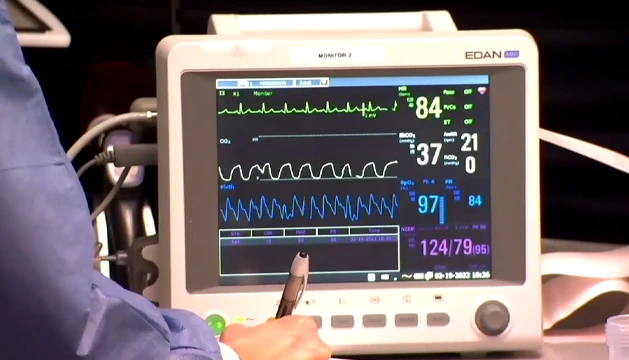
A certified registered nurse anesthetist (CRNA), or an Anesthesiologist is trained to manage these responsibilities. They monitor the patient’s breathing, blood pressure, oxygenation, and CO₂ levels throughout the procedure. They are able to recognize subtle changes before a problem becomes serious. Their full attention is on the patient’s physiology—nothing else.
This is the same model used in hospital operating rooms. Full-arch procedures performed with this structure consistently show excellent safety outcomes.
People considering full-arch implants should feel comfortable asking a few straightforward questions during their consultation:
• Who will be handling the anesthesia during my procedure?
• Will there be someone whose only responsibility is monitoring me?
• Do you track breathing in real time?
• Based on my medical history, is an office setting appropriate for my level of sedation?
These questions are not only appropriate—they are encouraged. A quality practice will be transparent about how they ensure safety.
The death in Jacksonville is devastating, and it deserves careful investigation. But it is also an outlier. Thousands of similar procedures take place each month without complication. Full-arch implant surgery remains one of the most successful and reliable treatments in dentistry.
This moment is an opportunity to educate, not alarm. It reminds us that anesthesia deserves the same level of respect and preparation as the surgical procedure itself. When the right systems are in place—clear roles, continuous monitoring, and a dedicated anesthesia provider—these procedures are extraordinarily safe.
For readers who want to understand what modern, safety-focused full-arch implant care looks like, restorein24.com provides helpful information about treatment planning, sedation options, and the steps involved in responsible full-arch reconstruction. Becoming familiar with the process can help patients feel more confident when evaluating their options.
Sources
Greenberg AM. Sedation and Anesthesia in Dentistry. Wiley-Blackwell.
American Association of Oral and Maxillofacial Surgeons (AAOMS). Parameters of Care: Clinical Practice Guidelines for Oral and Maxillofacial Surgery. AAOMS; latest edition.
American Society of Anesthesiologists (ASA). Practice Guidelines for Moderate Procedural Sedation and Analgesia.
American Dental Association (ADA). Guidelines for the Use of Sedation and General Anesthesia by Dentists.
Jivraj S, Chee W, Corrado P. “Treatment planning of the edentulous mandible: A systematic approach to dental implants.” British Dental Journal.
Misch CE. Contemporary Implant Dentistry. 4th ed. Mosby; a foundational text on implant safety and outcomes.
Cohen HP, Orenstein IH, Chen J, Ambramson M. “The success of dental implants: Long-term clinical data.” Journal of Oral and Maxillofacial Surgery.
Boynes SG, et al. “Anesthesia complications in the dental office.” Dental Clinics of North America.
American Association of Nurse Anesthesiology (AANA). Standards for Nurse Anesthesia Practice.